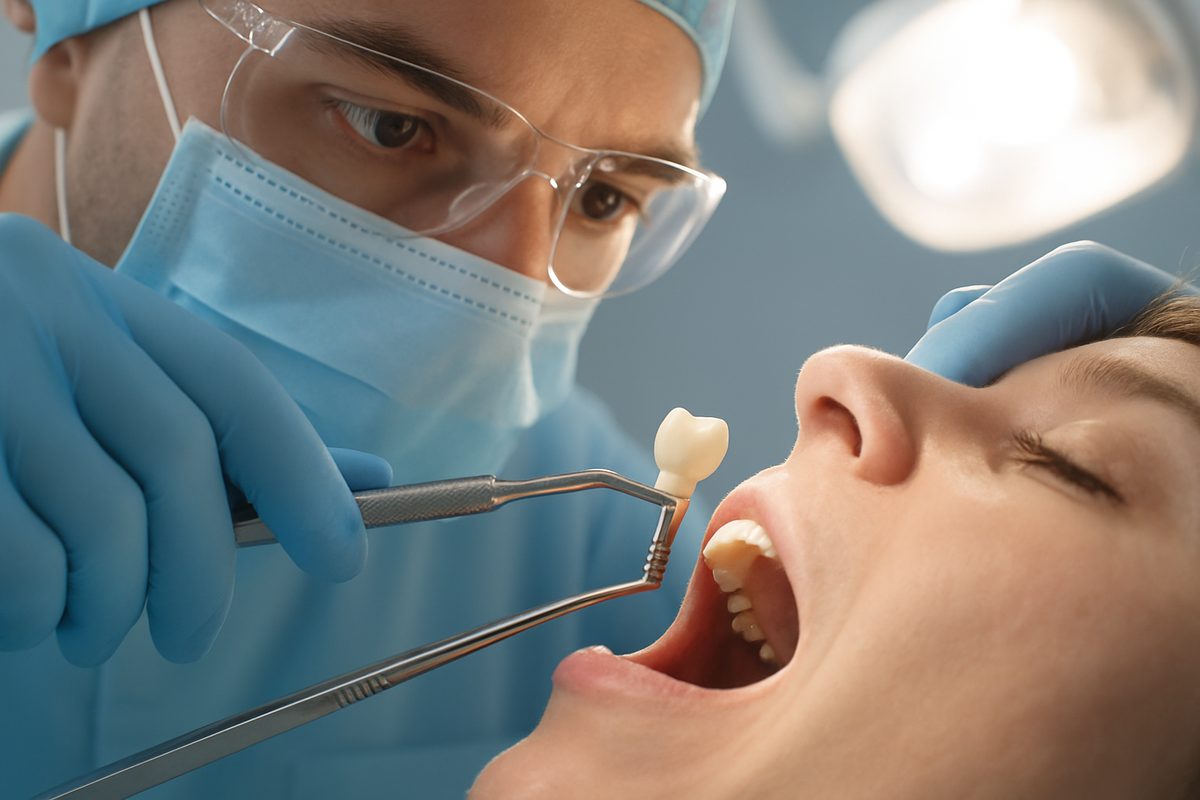
An upper tooth implant is a titanium post placed into the upper jaw to replace a single failing or missing upper tooth. It acts like a root, supports an abutment, and holds a crown that looks and works like a natural tooth. This post explains who needs an upper tooth implant, how we plan and place one, what recovery looks like, risks and success rates, how upper implants differ from lower ones, questions to ask at your consult, and how to schedule a visit for an upper tooth implant in Phoenix.
What Is an Upper Tooth Implant?
An upper tooth implant replaces one missing or damaged tooth in the upper jaw. The implant has three main parts: the implant body (the titanium post placed in bone), the abutment (the connector), and the crown (the visible tooth). Together they restore chewing, speech, and the look of a natural tooth. An upper tooth implant is designed to fuse with bone so it stays stable for many years.
Who Is a Good Candidate for an Upper Tooth Implant?
Good candidates include people with a fractured tooth, a long-term missing tooth, decay beyond repair, or a failed root canal. Overall health matters: chronic conditions like uncontrolled diabetes, heavy smoking, or compromised immune systems can affect healing. Sufficient bone volume in the upper jaw is also needed; if bone is thin, grafting may be necessary before an upper tooth implant in Phoenix.
Initial Exam and Planning
3D Imaging and Digital X‑rays
We use CBCT and digital X-rays to check bone height, width, nerve position, and where the sinus sits above the upper jaw. These images show whether an upper tooth implant in Phoenix can be placed immediately or if extra steps like a sinus lift are needed.
Treatment Planning and Guided Surgery
Virtual planning lets the dentist map the implant position on the 3D scan. Computer-guided surgery uses that plan to make a precise guide for implant placement. Guided placement improves safety and accuracy for an upper tooth implant in Phoenix, especially when working near the sinus or in tight bone.
The Upper Tooth Implant Procedure: Step by Step
Consultation and Preparatory Work
At your first consult we review scans and health history. If the tooth is still present, it may need extraction. If bone is low, a graft or sinus lift may be done first. Sometimes these steps add weeks to months before placing the implant.
Implant Placement
On surgery day local anesthesia numbs the area. The implant is inserted into the bone, often using a surgical guide. The procedure usually takes under an hour for a single upper tooth implant. You may leave with a temporary tooth to keep function and appearance while the implant heals.
Healing and Osseointegration
Bone integrates with the titanium implant over a few months—typically 3–6 months for the upper jaw. During this time you should follow diet and hygiene instructions. Temporary restorations protect the site while osseointegration occurs.
Final Restoration
After healing, the abutment is attached and a custom crown is placed. The crown is matched for color and shape so the new tooth blends with your smile. Once finished, the implant functions like a real tooth for chewing and daily use.
Pain Control and Sedation Options
Comfort options include local anesthesia, nitrous oxide (laughing gas), oral sedation, and IV sedation for anxious patients. Most people have mild to moderate discomfort after placement, controlled with over-the-counter or prescription pain meds. Discuss which option is best for you before your upper tooth implant in Phoenix.
Recovery Timeline and Aftercare for an Upper Tooth Implant
Immediate aftercare (first 48–72 hours): expect swelling, mild bleeding, and soreness. Use ice, soft foods, and prescribed pain control. Short-term (first 2 weeks): keep a soft diet, gentle oral hygiene, and avoid heavy exercise. Long-term maintenance: brush and floss around the implant, attend routine dental visits, and watch for signs of trouble like persistent pain, swelling, or looseness.
Risks, Success Rates, and Factors That Affect Outcome
Dental implants have high success rates, often over 95% in healthy patients. Risks include infection, implant failure, sinus complications, and bone loss. For upper tooth implants, bone density in the upper jaw and proximity to the sinus are key concerns. Smoking, uncontrolled diabetes, and surgeon experience also affect outcomes.
How Upper Tooth Implants Differ From Lower Implants
The upper jaw often has softer bone and sits under the sinus, which can require a sinus lift or angled implant placements. Lower jaw bone is usually denser and closer to the mandibular nerve, so placement angles and planning differ. These anatomical differences guide choices for an upper tooth implant in Phoenix.
Why Choose Phoenix Implant Clinic for an Upper Tooth Implant
Phoenix Implant Clinic offers experienced doctors who use 3D imaging and computer-guided surgery for precise implant placement. The team provides multiple sedation options and combines surgical implant care with full restorative services. The clinic has a long track record of patient-centered care and many positive reviews.
Questions to Ask at Your Implant Consultation
Ask about the doctor’s implant experience and how many upper tooth implants they’ve placed. Confirm use of 3D imaging and guided surgery. Ask about likely need for bone grafting or a sinus lift, expected timeline, sedation choices, cost and financing, follow-up care, and any warranty on the work.
Next Steps: Scheduling Your Consultation for an Upper Tooth Implant
If you’re considering an upper tooth implant in Phoenix, schedule a consultation to review a 3D scan and get a personalized plan. A single visit will help you understand the steps, timeline, and comfort options so you can make an informed choice about restoring your smile.