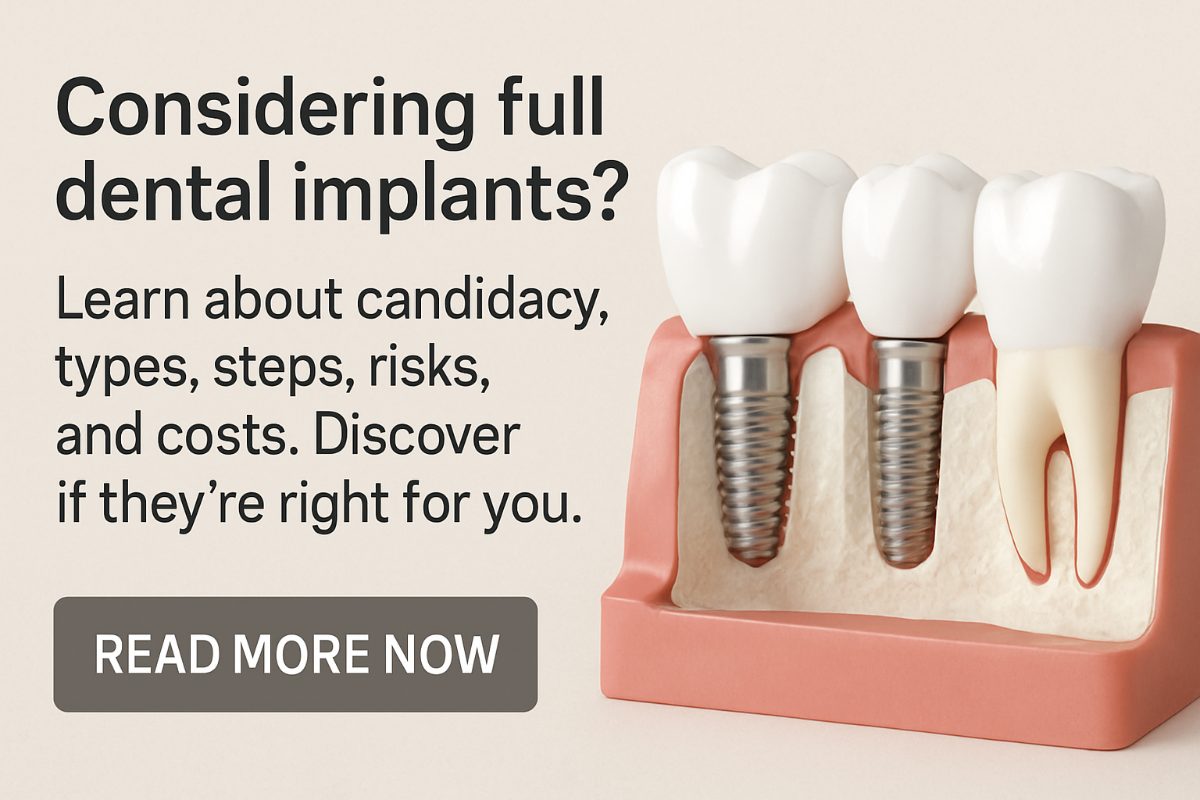
An implant of a tooth is a small titanium post placed into the jaw to replace the root of a missing tooth. People choose an implant to restore chewing, speak clearly, prevent nearby teeth from shifting, and maintain jawbone health. This article explains who makes a good candidate, standard implant solutions, a clear step-by-step guide to the treatment, factors that determine the best approach, risks and success rates, how to choose the right provider, and next steps for cost and aftercare. Read on to learn the practical steps and decisions involved.
Who is a good candidate for an implant of tooth?
Good candidates are generally in good health, have healthy gums, and sufficient jawbone where the implant will be placed. Conditions like uncontrolled diabetes, heavy smoking, or active gum disease raise the risk of failure. Older age alone is not a barrier. Your dentist will use 3D scans to assess bone volume and review your medical history to ensure you can heal well after surgery.
Common types of implant solutions
Single implant for one tooth
A single implant replaces one missing tooth. After the implant integrates, a custom crown is attached. This looks and functions like a natural tooth, preserving bone under the missing tooth.
Implant-supported bridge
When several adjacent teeth are missing, two or more implants can support a bridge. This avoids altering healthy teeth that would otherwise need crowns for a traditional bridge and gives a stronger, longer-lasting solution.
Implant-supported dentures & All-on-4 / All-on-X
For people missing most or all teeth, implant-supported dentures or All-on-4/All-on-X systems provide fixed full-arch restorations. These solutions can often avoid bone grafts and offer stable chewing, improved speech, and a more natural feel than removable dentures.
The step-by-step best way to get an implant of tooth
1) Consultation and 3D planning
The process starts with a clinical exam, medical history review, and 3D imaging or digital X-rays. This planning finds the best implant position, avoids vital structures, and defines whether grafting or extractions are needed. A clear treatment plan and timeline are provided.
2) Pre-treatment work
Some patients need pre-treatment like tooth extractions, gum therapy to treat periodontitis, or bone grafts if bone is thin. These steps prepare a healthy environment for the implant and may add months to the timeline but improve long-term success.
3) Implant placement
Implant surgery places the titanium post into the jaw. Many practices use computer-guided surgery for precise placement. Sedation options range from local anesthesia to IV sedation. The procedure usually takes under an hour for a single implant and recovery from the surgical visit is typically a few days.
4) Healing and osseointegration
Osseointegration is the process where bone bonds to the implant. This takes about 3–6 months depending on location and bone quality. During this time, patients follow soft-food guidelines and good oral hygiene. Successful integration means the implant feels stable and shows no infection or pain.
5) Abutment and final crown/prosthetic
After healing, an abutment connects the implant to the crown or prosthetic. Impressions or digital scans create a custom crown, bridge, or denture that matches your bite and appearance. The final restoration is placed and adjusted for comfort and function.
Factors that determine the “best” approach for you
Deciding the best approach depends on your oral health, number of missing teeth, bone volume, desired timeline, budget, and cosmetic goals. A younger patient with one missing tooth may choose a single implant. Someone missing all teeth may benefit more from All-on-4. Your provider balances medical needs with your personal priorities.
Risks, success rates, and what can go wrong
Dental implants are highly successful—often above 90–95%—but risks exist. Common problems include infection, failure to integrate, or nerve irritation. Smoking, poor oral hygiene, and certain health conditions increase risk. Using 3D planning, sterile technique, and experienced clinicians lowers complications. Watch for persistent pain, swelling, or loosening and contact your dentist if symptoms appear.
How to choose the right provider for an implant of tooth
Look for providers with implant training and continuing education, good patient reviews, and use of 3D imaging and guided surgery. Ask about sedation options and whether treatment planning is explained clearly. A clinic that offers both surgical and restorative care under one roof can simplify the process and improve communication.
About Phoenix Implant Clinic and our implant approach
Phoenix Implant Clinic, part of Smile Dental Clinics, combines advanced surgical skills and full general dentistry to deliver predictable implant care. Dr. Eddie Harsini and Dr. Lawlay Azizi bring expertise in guided implant placement, cosmetic restoration, and patient comfort. The team uses 3D imaging, computer-guided surgery, biocompatible titanium implants, All-on-4/All-on-X options, and sedation as needed. Their focus is patient-centered planning and long-term results.
Cost, financing, and next steps
Costs vary by the number of implants, need for grafting, type of final prosthetic, and materials used. Single implants with a crown typically cost less than full-arch solutions. Many practices offer financing plans, third-party medical/dental financing, and in-office payment options. To get an exact estimate for an implant of tooth in Phoenix, AZ, book a consultation to receive a personalized plan and cost breakdown.
Aftercare and long-term maintenance
Daily brushing with a soft brush, flossing or interdental cleaning around the implant, and regular dental checkups are essential. Avoid hard habits like chewing ice or opening packages with teeth. With good care, implants can last decades. Contact the clinic if you notice pain, swelling, or any loosening.
Before you decide
– How long does an implant take? The full process can take 3–9 months depending on grafts and healing. – Is it painful? Most patients report manageable discomfort controlled with medication and sedation options. – Who is not a candidate? Those with uncontrolled medical conditions, active gum disease, or inadequate bone without willingness for grafting may need alternatives. Ready to learn the best way to get an implant of tooth? Schedule a consult to review your medical history, 3D imaging, and a personalized treatment plan.