A dental implant in Phoenix, AZ replaces a missing tooth root with a titanium post that supports a crown, bridge, or denture. Many patients choose implants for long-term stability, better chewing, and a natural look. This step-by-step guide explains how a dental implant is done in Phoenix, AZ, from the first visit through the final restoration and what to expect along the way.
Before Getting a Dental Implant: Consultation & Treatment Planning
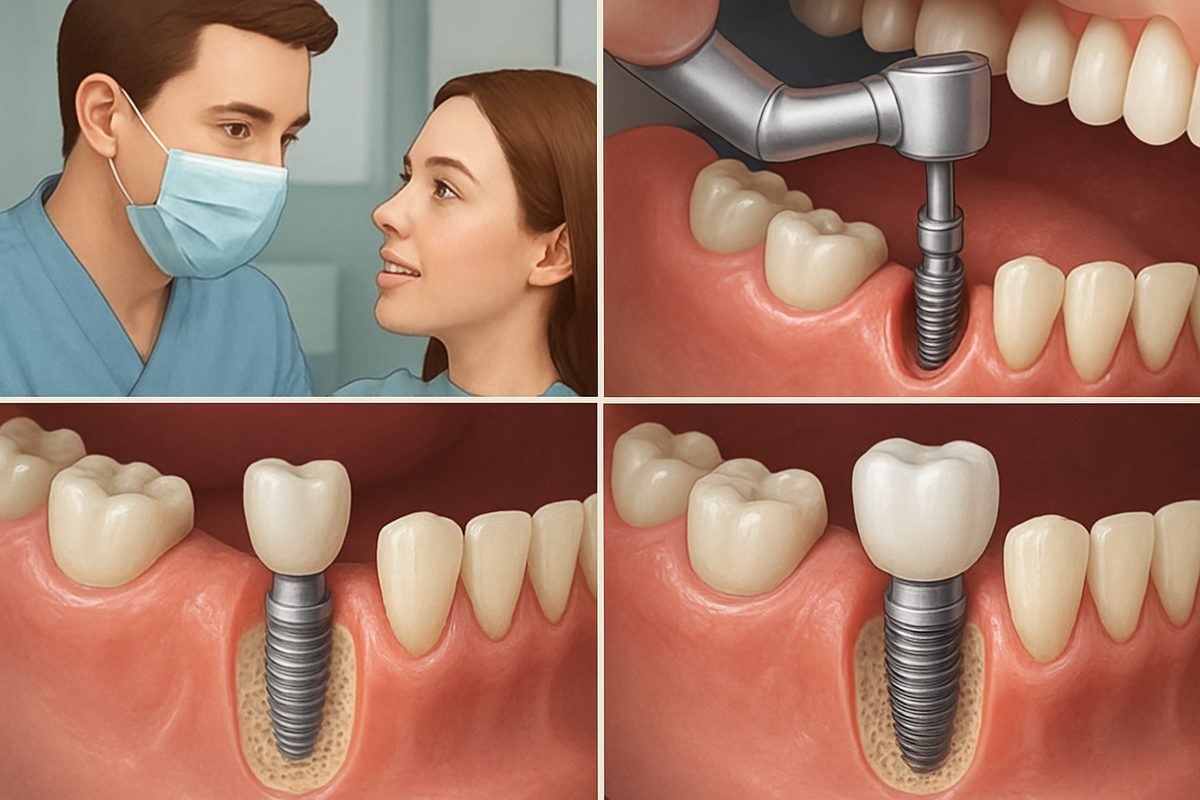
Your first visit focuses on understanding your health and goals. Expect a review of medical and dental history, an oral exam, and a talk about what you want from treatment. For a dental implant in Phoenix, AZ, clinicians use 3D imaging and digital x-rays to map bone, nerves, and sinus anatomy. That imaging shows if a tooth needs extraction or if bone grafting or a sinus lift is required.
The team will also review sedation options, the estimated timeline, and cost. You’ll get informed consent and a clear plan that explains each step, follow-up visits, and alternatives to an implant.
Step-by-Step: How a Dental Implant Is Done In Phoenix, AZ
Anesthesia & patient comfort
Most implant procedures begin with local anesthesia to numb the area. Many practices offering a dental implant in Phoenix, AZ also provide nitrous oxide, oral sedation, or IV sedation for added comfort. With local anesthesia you should feel pressure but no sharp pain. Sedation helps you relax and may make the experience feel like it was over quickly.
Tooth extraction and site preparation (if needed)
If a damaged tooth must be removed, it may be extracted the same day as implant placement or in a separate visit. Sometimes the socket is preserved with a bone graft to keep the ridge shape. If infection is present, your dentist might wait for healing before placing the implant.
Bone preparation and guided implant placement
For a dental implant in Phoenix, AZ, modern care often uses computer-guided surgery based on 3D scans. The surgeon follows a precise drilling sequence that matches the digital plan to prepare the bone for the implant. Guided placement improves accuracy, protects nearby nerves, and helps position the implant for the best long-term result.
Implant insertion and wound closure
The titanium implant is placed into the prepared socket and may receive a cover screw or a healing cap. The gum is then sutured to protect the site. Healing times vary based on bone quality and whether grafting was done.
Immediate temporary restorations
In some cases a temporary tooth is attached the same day (immediate load). Other times the implant needs several weeks to integrate before a temporary or final restoration is placed. Your provider will decide based on stability at placement and your bite needs.
Healing & Follow-Up: Osseointegration After a Dental Implant in Phoenix, AZ
Osseointegration is the process where bone bonds to the implant. It usually takes several weeks to a few months. Expect scheduled check-ups and occasional x-rays to confirm healing. Normal signs include mild swelling, minor discomfort, and gradual reduction of sensitivity.
Warning signs that need prompt care: increasing pain, heavy bleeding, fever, pus, or loose implants. Technologies like guided surgery and digital monitoring help reduce complications and speed recovery by improving placement accuracy and follow-up planning.
Final Restoration: Abutment, Crown, Bridge or Implant‑Supported Denture
Once healed, the abutment connects the implant to the final restoration. Your team will take impressions or digital scans to design a crown, bridge, or denture. Options for a dental implant in Phoenix, AZ include:
- Single implant crown for one missing tooth
- Implant-supported bridge for several missing teeth
- Removable or fixed implant-supported dentures
- All‑on‑4 / All‑on‑X full-arch solutions for complete arches
Immediate-load restorations are placed right away if primary stability is high. Delayed restorations wait for full integration. Expect a few appointments for try-ins, adjustments, and the final fit.
Special Cases & Alternatives
Bone grafting and sinus lifts are common when bone volume is low. These add time (often months) but make implants possible. All‑on‑4 and All‑on‑X use angled implants to often avoid grafting and offer a full-arch fixed solution faster.
Less invasive alternatives include mini implants or traditional removable dentures. Referral to an oral surgeon or prosthodontist is recommended for complex cases such as severe bone loss, medical conditions, or when advanced full-mouth restorations are planned.
Risks, Aftercare, Cost, Insurance, and Choosing a Dental Implant Provider in Phoenix, AZ
Common risks include infection, nerve irritation, sinus problems, and implant failure (rare). Expect soreness for a few days, a soft-food diet initially, and a short time off work for most patients. Follow-up care includes good oral hygiene, medication as prescribed, and scheduled check-ups.
Cost depends on the number of implants, need for grafting, type of restoration, and materials. Many offices offer financing; some dental insurance covers part of the crown or extractions but not the full implant. Ask your provider for a written estimate and financing options.
Choose a provider for a dental implant in Phoenix, AZ by checking experience, technology (3D imaging, guided surgery), sedation options, before-and-after cases, and patient reviews. A clear treatment plan and good communication are key.
Phoenix Implant Clinic offers advanced 3D imaging, guided implant placement, multiple sedation choices, and over 900 five-star reviews. Call to schedule a consultation and learn if a dental implant in Phoenix, AZ is right for you.