Understanding the phrase dental implants meaning can remove a lot of worry when you’re facing tooth loss. This clear, friendly guide explains what dental implants are, who might need them, and what you’ll learn here: how they work, common types, the treatment steps, risks, costs, and how to pick care. Expect a practical, about-800-word primer that leaves you ready to ask the right questions about dental fixtures in Phoenix.
What Do We Mean By “Dental Implants”?
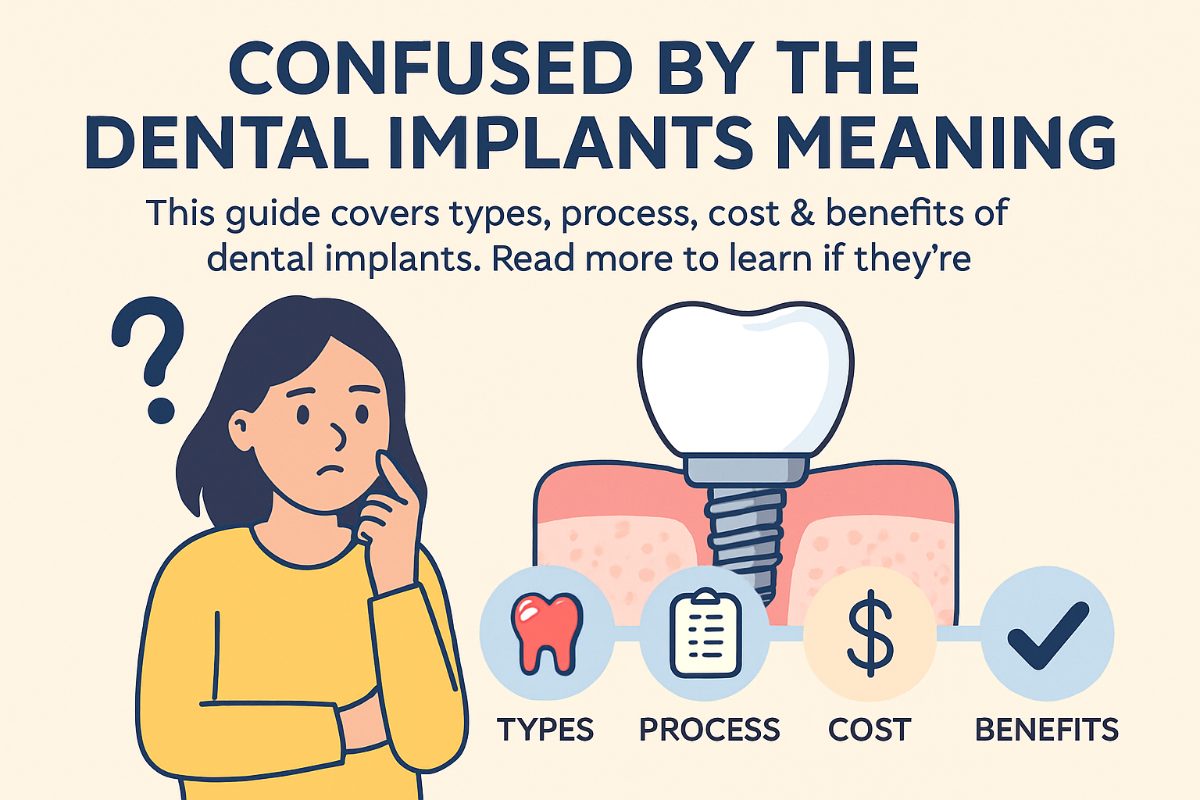
The simplest way to explain dental implants is to break them into three parts: the implant (the root), the abutment (the connector), and the crown or prosthetic (the tooth you see). Most implants are made of titanium because it bonds well with bone — a process called osseointegration — so the new root becomes part of your jaw. Unlike bridges or removable dentures, implants replace the tooth root and help preserve bone and chewing strength.
When people talk about dental fixtures in Phoenix, they usually mean these implant systems that act like natural teeth, not temporary false teeth or simple tooth caps.
Common Types of Dental Implants
There are a few common forms of implant care you’ll hear about:
- Single-tooth implants: One implant and one crown to replace a single missing tooth.
- Implant-supported bridges: Two or more implants support a bridge when several teeth are missing.
- Implant-retained dentures: Dentures that snap onto several implants for more stability than regular dentures.
- All‑on‑4 / All‑on‑X full-arch systems: Four (or more) implants support a whole arch of teeth, often avoiding bone grafts.
Single implants are common when just one tooth is gone. Bridges fit people missing a few teeth. Full-arch systems are best for people who need most or all teeth replaced and want a fixed solution. All of these are types of dental fixtures in Phoenix offered by implant teams.
Who Is A Good Candidate?
Good candidates are healthy enough for minor oral surgery, have or can have enough jawbone (or are willing to have grafting), practice decent oral hygiene, and have realistic expectations. Age alone rarely rules anyone out.
Some conditions can make implants riskier: uncontrolled diabetes, heavy smoking, certain medications (like high-dose steroids or some cancer drugs), and poor healing. A thorough exam and 3D imaging help determine if implants or other dental fixtures in Phoenix are right for you.
Step‑by‑Step: What To Expect During Treatment
Typical treatment follows a clear timeline:
- Consultation and 3D imaging: A CBCT scan and exam to plan implant placement.
- Treatment planning: Digital guides show where implants will go; pricing and timing are set.
- Implant placement (surgery): The implant is positioned in the jaw. Sedation options range from nitrous oxide to IV sedation.
- Healing / osseointegration: Bone bonds to the implant over weeks to months.
- Final restoration: The abutment and crown or full prosthetic are placed.
Recovery is usually manageable with over-the-counter pain meds or prescription medication for a short period. Sedation helps anxiety and comfort during surgery.
Benefits, Risks, And Longevity
Benefits include stable chewing, preserved jawbone, improved speech, and a natural look and feel. Implants can protect adjacent teeth because they don’t rely on neighboring teeth for support.
Risks are low but can include infection, implant failure, nerve or sinus problems, and the need for additional procedures. Success rates are high — often over 95% for healthy patients — and with good care, many implants last decades. Regular checkups and hygiene are essential to keep your dental fixtures in Phoenix working well.
Cost Factors & Payment Options
Costs vary based on how many implants you need, whether bone grafting is required, the complexity of the prosthetic, use of technologies like 3D-guided surgery, and the clinician’s experience. Full-arch systems cost more upfront but can be more economical than multiple single implants.
Common payment options include partial dental insurance coverage, in-house payment plans, third-party financing, or special offers. Ask for an itemized estimate and compare options so you know exactly what your quoted price includes.
How To Choose The Right Provider
Look for training and experience in implant dentistry, use of 3D imaging and computer-guided surgery, clear sedation choices, and strong before/after photos and patient reviews. Ask directly about complication rates, long-term follow-up, and who will manage any problems that arise.
Why Consider Phoenix Implant Clinic
Phoenix Implant Clinic focuses on implant and restorative care using 3D imaging, computer-guided surgery, All‑on‑4 options, and multiple sedation choices for comfort. The clinic combines implant expertise with full general dentistry and has over 900 five-star reviews.
Lead clinicians include Dr. Eddie Harsini, DDS — trained at UMKC with extensive implant continuing education — and Dr. Lawlay Azizi, DMD — a Boston University graduate skilled in restorative and family dentistry. Their team offers modern implant techniques and caring patient support for dental fixtures in Phoenix.
FAQs (Quick Answers)
- Does it hurt? Most people report mild discomfort. Sedation and good pain control make the procedure manageable.
- How long does it take to heal? Initial healing is days to weeks; full osseointegration can take 3–6 months, depending on the case.
- Can anyone get implants? Many can, but medical conditions, smoking, or poor bone may require extra steps or rule them out.
- What if I don’t have enough bone? Bone grafting or zygomatic/All‑on‑X techniques can often solve that problem.
- Will insurance pay? Some plans cover part of the cost; financing and payment plans are common to fill gaps.
If you’re ready to learn how implants could work for you, schedule a consultation for a personalized assessment. Contact Phoenix Implant Clinic to discuss your questions and get a clear plan for your dental fixtures in Phoenix.