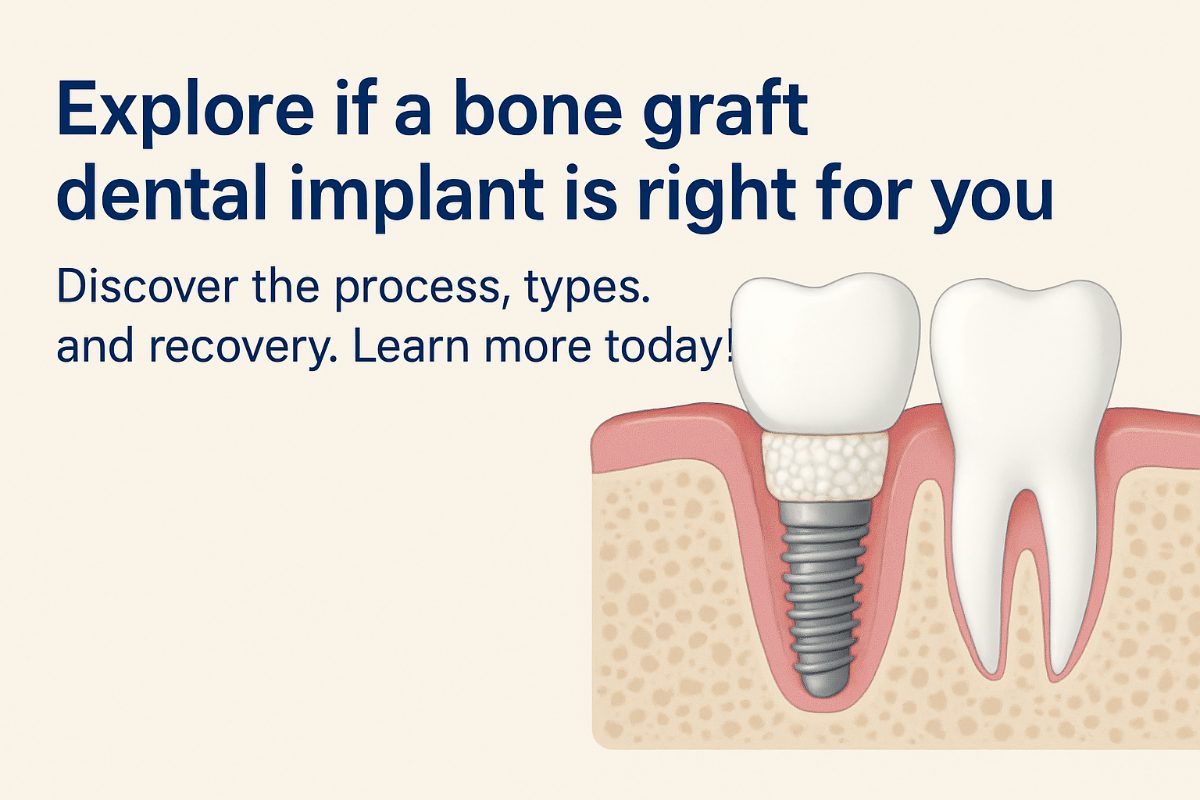
A bone graft dental implant is a two-part approach: rebuilding lost jawbone and placing a dental implant that replaces a missing tooth. Bone grafting matters because implants need solid bone to fuse to for long-term stability. This article explains what a bone graft dental implant in Phoenix, AZ involves, the types of grafts used, how grafting affects time and cost, who needs grafting, what to expect during treatment, recovery, and how to take the next step if you’re considering care in Phoenix, AZ.
What Is A Bone Graft And Why It Matters For Dental Implants In Phoenix, AZ
A bone graft is material placed where the jaw has lost volume so an implant can be supported. For a successful bone graft dental implant in Phoenix, AZ, the graft must integrate with your native bone so the implant can osseointegrate—fuse to bone health. Without enough bone width or height, an implant can fail, shift, or cause surrounding teeth to suffer. Adequate bone preserves function, appearance, and long-term health of the implant restoration.
Common Types Of Bone Grafts For Dental Implants
Autograft (your own bone)
An autograft uses bone from your body—common donor sites are the chin, ramus, or hip for larger needs. Pros: best healing and low rejection risk. Cons: extra surgical site, more discomfort, and longer recovery. Autografts are chosen when maximum predictability is needed for a bone graft dental implant in Phoenix, AZ.
Allograft, Xenograft, And Synthetic Options
Allografts come from human donors, xenografts from animals, and synthetics are man-made. These options avoid a second surgical site and have predictable results for many patients. Healing timelines vary: some grafts allow implant placement in 4–6 months, others support simultaneous placement. Choice depends on amount of bone needed and patient preferences for a bone graft dental implant in Phoenix, AZ.
How A Bone Graft Dental Implant In Phoenix, AZ Affects Timeline And Cost
Adding a bone graft often extends treatment by several months if staged (graft then implant). Some cases allow grafting and implant placement together, shortening the timeline. Cost factors include graft material, number of grafts, need for sinus lifts or ridge augmentation, and whether additional procedures are required. Insurance may cover part of the surgical cost but often not the full implant; financing options are commonly used for a bone graft dental implant in Phoenix, AZ.
Who Needs A Bone Graft Before A Dental Implant?
You may need a graft if you’ve had a missing tooth for years, experienced bone loss from periodontal disease, or suffered trauma. Your dentist uses clinical exams and 3D imaging to measure bone volume. If scans show insufficient width or height, a bone graft dental implant in Phoenix, AZ will likely be recommended to ensure implant stability.
What To Expect During A Bone Graft And Implant Procedure
Expect a consultation and 3D scans, followed by graft placement under local or sedated anesthesia. Some patients receive graft material and an implant at once; others heal months before implant surgery. Computer-guided surgery improves precision and comfort. Sedation options range from nitrous to IV, based on case complexity and patient needs.
Recovery, Success Rates, And Risks For Bone Graft Dental Implant
Recovery commonly includes swelling and mild discomfort for a week, with full healing over months. At-home care—oral hygiene, soft diet, and follow-up visits—supports success. When performed correctly, grafting combined with implants has high success rates; risks include infection, graft failure, or delayed healing. Advanced imaging and guided techniques reduce these risks for a bone graft dental implant in Phoenix, AZ.
Why Choose Phoenix Implant Clinic For A Bone Graft Dental Implant In Phoenix, AZ
Phoenix Implant Clinic uses 3D imaging and computer-guided surgery for precise grafting and implant placement. Dr. Eddie Harsini and Dr. Lawlay Azizi combine surgical and restorative expertise to plan predictable outcomes. The clinic offers All-on-4 options that can avoid grafting in some full-arch cases, plus sedation choices for comfort. Experience top-tier care for your bone graft dental implant in Phoenix, AZ.
How To Take The Next Step
Bring a list of medications, dental records, and any prior X-rays to your consult. The clinic will evaluate bone needs with 3D scans and discuss graft types, timelines, and financing. Ask about insurance limits and monthly payment plans. To schedule a visit or virtual consult, contact Phoenix Implant Clinic to review options for a bone graft dental implant in Phoenix, AZ.